

If your Osclass site has been running slower than usual, or your hosting bill has climbed while your listing count and real signups have not, the extra traffic is probably not coming from people. Across classifieds and marketplace sites, a growing share of requests now comes from AI crawlers and AI agents, not customers browsing for something to buy or sell.
This is not a temporary spike. AI bots have become a permanent part of the traffic mix on any public website, and classifieds platforms, with thousands of listing pages, search combinations, and images, are one of the categories getting hit hardest. The good news is this is solvable, and the fix does not mean rejecting AI traffic entirely, since some of it is worth keeping. It means knowing the difference between the AI traffic that helps you and the AI traffic that only costs you money.
This guide covers what AI traffic actually is, why classifieds sites attract so much of it, what most site owners try first and why it usually falls short, and the full set of options inside Osclass, from free server level fixes to premium plugins built for exactly this problem. It closes with a real case from a project I worked on this year to bring a struggling Osclass marketplace back under control.
AI traffic is not one thing, and treating it as one thing is the first mistake most site owners make. Cloudflare, which sits in front of a large share of the web, now splits AI related bots into three functional categories, and this split is a useful way to read your own logs too.
Search crawlers fetch pages to power AI answer engines and AI powered search results. When someone asks an AI assistant a question and it cites or summarizes a page from your site, a Search crawler is usually how that page got read. This category can send you real visitors, the same way a Google search result can.
Agent crawlers act on behalf of a specific user in real time, for example an AI browser assistant checking a listing page because someone asked it to. This traffic is closer to a human visit than a crawl, just automated.
Training crawlers exist for a different reason entirely. They scrape content to build or update the datasets behind AI models. Bots like GPTBot, ClaudeBot, and Bytespider fall into this group. A Training crawler does not send you a visitor, does not link back the way a browsing human would, and does not care whether your server can handle the load. It takes what it needs and moves to the next site.
Lessons learned: Do not block AI traffic!
You might be thinking: hop on Cloudflare, block AI bots, and you're safe. Yes and no. Blocking everything today is the same mistake as blocking search crawlers fifteen years ago. AI traffic is valuable traffic — citations and links inside AI answers build trust and bring in new customers and visitors, and that's what everyone actually wants.
I was involved in server workload optimization at OsclassPoint.com, which also runs on Osclass (a customized core). What I first recommended, and later implemented, was a partial block of specific AI bots — but it did not go as planned. Claude also started to complain it could not crawl OsclassPoint, and that was a serious issue. In the end, we opened the doors to all AI traffic. Instead of blocking, we set rate limit rules in Cloudflare, redesigned robots.txt for honest AI crawlers, implemented file and database query cache (memcached), optimized query executions, created new indexes and protected forms with Turnstile Recaptcha Plugin for Marketplace.
The scale here is no longer small. In June 2026, Cloudflare Radar data showed automated requests overtaking human traffic on the open web for the first time — bots now account for 57.5% of HTTP requests to HTML content, versus 42.5% from humans (Cloudflare Radar, June 2026). AI crawlers are a growing slice of that shift: individual bots like Bytespider have been measured accessing more than 40% of Cloudflare-protected websites (Cloudflare), and Anthropic's ClaudeBot grew from around 6% to nearly 10% of AI crawler traffic in a single year (Cloudflare). None of that traffic is malicious in the criminal sense, but on a server that renders every page dynamically, it behaves exactly like load, friendly or not.
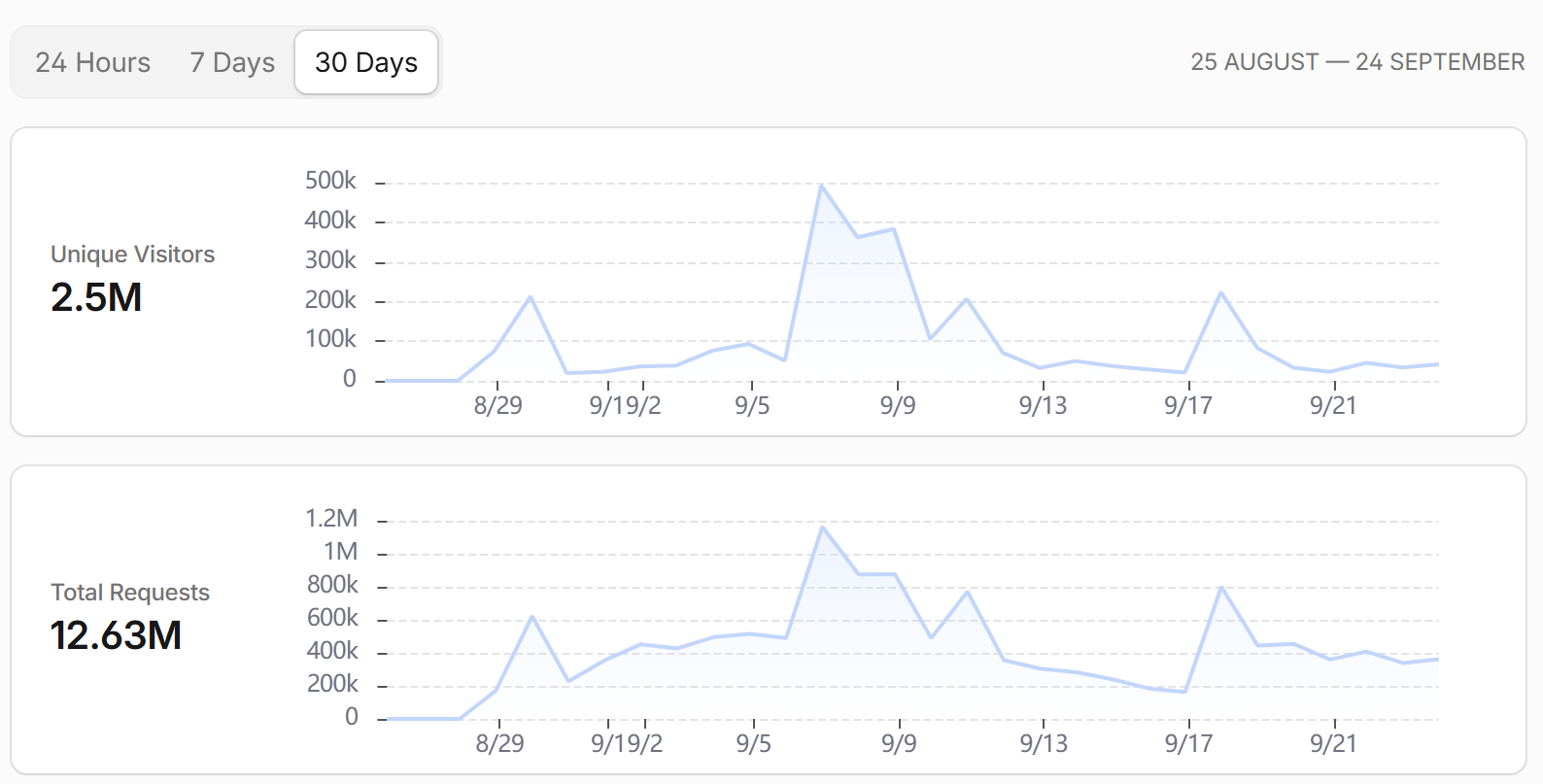
Some AI traffic is genuinely useful. The point is that Search, Agent, and Training crawlers deserve different treatment, and most site owners only discover this distinction after their server is already struggling.
Classifieds and marketplace sites are structurally more attractive to crawlers than a typical brochure or blog site, for a few specific reasons.
The first is the size of the crawlable surface. Every combination of category, location, price range, and sort order on a search page is a separate, valid URL. A crawler does not need to be aggressive to generate huge request volume, it only needs to walk through the permutations your own search filters create. A site with a handful of categories and locations can easily expose tens of thousands of indexable URL combinations without anyone intending it.
The second is freshness. Listings change daily, sometimes hourly on an active marketplace. Crawlers that want current data, whether for a Training dataset or a Search index, have a reason to come back often instead of crawling once and moving on.
The third is images. Every listing usually carries several photos, and Osclass generates multiple size variants for each one. Images are the real bandwidth cost on most classifieds sites, often larger than the entire HTML payload combined. A crawler that touches listing pages is also touching every image on those pages unless you have specifically blocked that.
The fourth is architecture. Osclass, like most classifieds software, renders pages dynamically with PHP and MySQL by default. A static site or a heavily cached application can absorb a crawl with almost no server cost. An uncached Osclass page cannot. Every hit, human or bot, triggers real database queries and real PHP execution, so bot traffic has a direct, measurable cost per request in a way it does not on other kinds of sites.
The fifth reason is less technical but just as real. Classifieds listings are public, structured, and clean to parse, exactly the kind of content that is efficient for a crawler to process. There is no login wall, no paywall, and the data model stays consistent from page to page. From a crawler's point of view, a classifieds site is close to ideal.
Put these together and it becomes clear why classifieds platforms show up disproportionately in AI crawler logs compared to other site types of similar size.
By the time most site owners notice AI traffic as a problem, the server is already struggling, and the response is often reactive rather than planned. A few patterns come up again and again.
The first is doing nothing until something breaks. Hosting gets upgraded after the fact, treating a symptom instead of the underlying request pattern. The bots keep coming, the new resources fill up too, and the cycle repeats at a higher cost each time.
The second is blocking everything labeled as a bot. This feels safe, but it throws away the Search crawlers along with the Training ones, which means giving up visibility in AI powered answer engines at the same time you are trying to stop the traffic that actually hurts you. Search and Training crawlers are not the same threat, and a blanket block treats them as if they were.
The third is simply paying for more server capacity. This changes the bill, not the traffic. The crawlers keep generating the same request pattern, the site keeps paying to serve it, and the cost per request never improves.
The fourth is installing a generic security or anti spam plugin and expecting it to solve this. Those plugins are usually built to catch form spam, credential stuffing, and obvious abuse patterns. A well behaved AI crawler that respects rate limits and follows standard HTTP conventions rarely trips these rules, because it is not doing anything a generic bot filter is designed to catch. It is making a large number of legitimate looking requests.
None of these approaches are wrong exactly, they are just incomplete on their own. The real fix is layered: start with what is free and applies at the server or network edge, then add Osclass specific plugins that reduce the cost of every request that still reaches your site.
Cloudflare is the first stop for most Osclass sites, and even the free plan gives you real control over AI traffic. Cloudflare now applies a managed, AI aware robots.txt automatically, and it exposes the Search, Agent, and Training categories directly in the dashboard, so you can allow, challenge, or block each one without writing your own rules.
The setup I recommend for a classifieds site: keep Search crawlers allowed, since they are the ones capable of sending real visitors through AI powered search results. Challenge or block Training crawlers by default, since they offer no benefit to a listings site with no content licensing arrangement in place. Treat Agent crawlers case by case, watching your logs for a few weeks before deciding.
One thing worth flagging directly: these defaults changed meaningfully through 2026, with new domains onboarding to stricter Training and Agent defaults from September of that year. If you set up your bot rules a year or more ago, go back and check what is actually configured now, because it may not match what you originally set.
Geo blocking through .htaccess is a blunt instrument, and it should stay that way: deliberate and narrow, not a default setting. Look at your own access logs first. If a specific country or region is generating a disproportionate share of requests with almost no matching real signups, listings, or purchases from that same region, that is evidence you can act on.
Blocking a region without that evidence risks losing real customers in markets where your classifieds category genuinely has demand. This is the difference between an evidence led fix and a generic list copied from a forum post. Apply geo exclusions only when your own logs justify it, review the rule periodically, and be ready to loosen it if the traffic pattern changes.
A well structured robots.txt file is still worth maintaining, even though it is a policy statement rather than an enforcement mechanism. Set explicit rules for known Search category user agents, allow, and known Training and Agent user agents, disallow or restrict, and update the list regularly, since new AI crawler user agents appear often.
Cloudflare's Content Signals framework adds a newer option: a use parameter that lets you express index me but do not train on me, separate from a blanket allow or disallow. It is not universally respected yet, but it is the direction robots.txt is heading for AI specific policy.
Keep expectations realistic here. Cloudflare's own analysis found AI bots reaching roughly 39% of the top million sites on its network, while only about 3% of those sites took any step to block or challenge them (Cloudflare). Separate tracking puts it even more bluntly: roughly three in ten AI bot scrapes ignore robots.txt rules entirely (TollBit, Q4 2025 State of the Bots). The file matters, but it is not the whole defense.
If you are running a current version of Osclass, 8.x and later, built in minification and asset optimization already ship in the core, so a separate minification plugin is no longer necessary. What still matters is making sure this is actually enabled and that your theme is not loading unnecessary CSS or JavaScript on pages that do not need it.
This is not only a speed improvement for human visitors. Every request a crawler makes to a lighter page costs less CPU and bandwidth than the same request to a bloated one. A smaller page is a smaller bot tax, on top of being a better experience for everyone else.
Free, server level defenses stop the worst of the traffic before it ever reaches PHP. The next layer is about reducing what every request that does get through actually costs you, and this is where Osclass specific plugins earn their price.
The Cache plugin is the single highest impact option on this list for AI traffic specifically. It generates static HTML for your pages, including every search filter combination, so a request, human or bot, does not trigger a fresh PHP and MySQL execution each time. Given how much of the AI crawling problem on a classifieds site comes from bots walking through search parameter combinations, turning those into cheap static hits instead of expensive dynamic ones is the most direct fix available. It's a one time purchase and pairs well with everything else on this list.
The CDN plugin moves static asset delivery, images, CSS, and JavaScript, off your origin server entirely. This matters because those assets, not the HTML page itself, are usually the real bandwidth cost on a listings site.
The S3 Cloud Image Storage plugin takes this further for images specifically, moving listing photos off your server's disk and bandwidth budget onto object storage such as Amazon S3, Wasabi, or Backblaze B2. Since images are one of the main reasons classifieds sites are attractive crawl targets in the first place, this plugin directly addresses the part of your page weight that crawlers cost you the most to serve.
On the security side, the Google reCAPTCHA Enterprise plugin adds score based, invisible bot detection on registration, login, contact, and listing publish actions. This is the layer that catches what a WAF rule or robots.txt entry cannot, because it works at the point where a bot is trying to act like a real user rather than just crawl a page. If you would rather stay inside Cloudflare's own ecosystem instead of Google's, the Turnstile plugin mentioned earlier in the case study covers the same forms using Cloudflare's own challenge.
The Contact Form Limits plugin rate limits and bans abusive message and form patterns at the IP and email level, which complements edge level rate limiting from Cloudflare rather than duplicating it. It is worth having both, since Cloudflare sees the request before it reaches Osclass, while this plugin sees the actual behavior once a request is inside.
None of these plugins claim to block AI bots by name, and that is intentional. Their job is to shrink the cost of every hit that gets past your edge defenses and to catch abuse patterns at the application layer that network level rules miss.
Early this year, a customer came to me with an Osclass marketplace that had grown steadily for two years and had started struggling under its own traffic. Pages loaded slowly during peak hours, server resource usage climbed month over month, and none of it matched their actual growth in real users or listings. Something was consuming resources that had nothing to do with customers.
I did not start by looking at bots. I started with the database, because a slow query costs you on every single request, whether it comes from a real visitor or a crawler, and fixing that improves everything downstream. Pulling the slow query log showed exactly what I expected: searches filtering and sorting on columns with no index, which meant every search page combination, the same combinations crawlers love to walk through, was running an expensive table scan instead of a fast lookup. Adding the missing indexes on the columns actually driving those filters cut the cost of the single most common request type on the site before touching a single bot related setting.
The mistake I see most often is treating AI traffic as a Cloudflare problem to solve first. On a database heavy platform like Osclass, the query and SQL layer is usually the actual bottleneck, and edge rules only look effective because they hide it.
With the query layer fixed, I moved to the traffic logs to see what was actually hitting the server so heavily. A clear pattern showed up: a large share of requests came from IP ranges based in China, hitting listing and search pages at a volume and pattern that did not match reasonable human browsing behavior, with essentially no corresponding signups or listings from that traffic. That is the evidence bar I look for before geo blocking anything, and it was clearly met here, so I restricted that traffic at the edge.
Next came Cloudflare rate limiting rules, targeted specifically at the search and listing endpoints absorbing most of the remaining load, rather than a blanket rule across the whole site. This caught the automated request patterns that were technically legitimate looking, one request at a time, but abusive in aggregate.
Finally, I installed the Cache plugin to handle what was left. Even with the query fixes and edge level restrictions in place, every uncached page hit still triggered PHP and MySQL execution, and cache is what turns that into a static, essentially free response for repeat and bot traffic alike.
The order mattered. Fixing the database first meant every later layer was protecting a site that was already cheaper to run, instead of masking a query problem behind edge rules. Server load and page response times improved noticeably, and the improvement held up under the site's normal peak hours, without losing legitimate traffic from the region that had been restricted.
It is worth being precise about what you are defending against, because AI traffic is not uniformly bad for a classifieds site. Search category crawlers can get your listings cited or summarized inside AI powered answers, and that can send you a visitor the same way a search engine result would. Blocking everything with AI in its name gives up that upside along with the cost you were trying to avoid.
The same shift driving this traffic to your site is also changing what visitors expect once they arrive. Buyers and sellers increasingly expect an instant, conversational way to get questions answered, whether that is about a specific listing, how posting works, or general site policies, without waiting on an email reply.
This is the other side of AI integration for classifieds, worth treating as an opportunity rather than only a defensive problem. An AI powered chat widget on your own site, like the AI Support Agent plugin, answers those questions instantly using your site's own content and policies. For marketplaces that want to go further, a custom AI integration covering listing enrichment, search, or moderation is a separate, larger project worth planning deliberately rather than bolting on later — get in touch and we can scope what that would look like for your site.
If your site is already struggling, work through these roughly in order of effort:
Wish you best luck with fighting AI bots, cache what you can cache, outsource what you can outsource 🤞
Question: What counts as AI traffic on a classifieds site?
Answer: Any automated request coming from an AI related agent. This includes Search crawlers that power AI answer engines, Agent crawlers acting live on behalf of a user, and Training crawlers scraping content for model datasets. They behave differently enough that treating them as one category is the first mistake.
Question: Are AI bots the same as regular bad bots?
Answer: They overlap but are not identical. Classic bad bots such as spam and credential stuffing have existed for years. AI crawlers are a newer, faster growing layer on top of that, and by 2026 they account for a large and measurable share of total bot traffic.
Question: Will blocking AI bots hurt my SEO?
Answer: It depends which ones you block. Blocking Search category crawlers can cost you visibility inside AI powered answers. Blocking Training or Agent crawlers that only scrape for model data carries no SEO downside for a listings site with no content licensing arrangement.
Question: How do I tell good AI crawlers from bad ones?
Answer: Judge by function rather than brand name. Search crawlers are worth keeping since they can send real visitors. Training crawlers are safe to block on most classifieds sites. Agent crawlers deserve a case by case decision based on your own logs.
Question: Does Cloudflare block AI bots for free?
Answer: At a basic level, yes. Free plans include a managed, AI aware robots.txt and bot category controls for Search, Agent, and Training traffic. More advanced features such as granular bot attribution require a paid plan, which is where Osclass side plugins pick up the slack.
Question: Should I block bots by country?
Answer: Only when your own access logs show a specific region generating disproportionate junk traffic with little to no matching real signups or listings. Treat geo blocking as an evidence led fix for a proven pattern, not a default setting applied out of habit.
Question: How much server load can AI bots actually cause?
Answer: Enough to matter. Individual crawlers have been measured hitting well over a third of protected sites, with year over year volume increases in the hundreds of percent for some bots. On a classifieds site with thousands of search parameter URLs, that multiplies fast.
Question: What is the fastest fix if my site is struggling right now?
Answer: Start with Cloudflare's bot categories and managed robots.txt, since both take minutes and are free. Install the Cache plugin next for the biggest single load reduction. Then investigate query and index optimization once the immediate pressure is off.
Question: Do I still need a cache plugin if I am already on Cloudflare?
Answer: Usually yes. Cloudflare's edge cache mainly helps static assets. Dynamic Osclass pages such as search results and listings still trigger PHP and MySQL on every uncached request unless a server side cache plugin generates static HTML for them.
Question: Can AI traffic ever be good for a classifieds site?
Answer: Yes. Search category AI crawlers can surface your listings inside AI generated answers and send real referral traffic. You can also put AI to work directly on your own site, for example through a chat widget, instead of only defending against it.